
April 2026
Why Your Company’s Problem Isn’t Mindset, It’s Architecture
The Innovation Culture Lie
0 in 0
We sat down with 150 global innovation leaders at a recent summit. They submitted their hardest challenges. And 1 in 4 blamed “culture” for stalled innovation. They’re misdiagnosing. The real culprit is broken relationship infrastructure. Not mindset. Not willingness. Architecture.
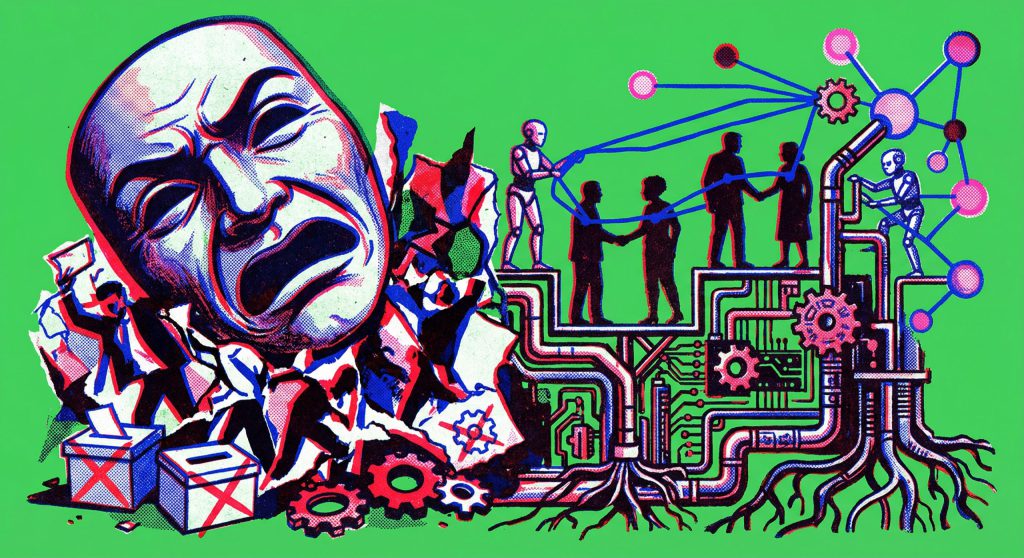
Innovation Theater vs. Innovation Architecture
Most companies are running the left column. HBR has been warning about this for years. The ones that win are running the right.
Theater
× Innovation days and hackathons
× “Be more innovative!” mandates
× Suggestion boxes and idea portals
× Measuring ideas submitted
× Annual innovation reports
Architecture
✓ Relationship infrastructure connecting unlikely people
✓ Facilitated collision, not brainstorming
✓ Measuring connections made and experiments run
✓ Compounding institutional knowledge with AI agents
✓ Daily operating rhythm, not annual events
What 150 Leaders Actually Said
Anonymized. Direct. Every one is about architecture, not attitude.
Leadership says they want innovation but legacy systems persist and the right talent isn’t in key roles
Resistance from a deeply conservative mindset, where innovation is reduced to just something different
How can we find time for innovation when we can’t find the time?
How does a stable, successful business build appetite beyond continuous improvement?
People who’ve worked the same way for decades. Different culture. How?
AI introductions feel like just another change to already exhausted teams
What Actually Works
The organizations that win at sustained innovation aren’t doing culture interventions. They’re building four architectural elements. Jack Dorsey just bet Block’s entire future on a version of this: replacing hierarchy with three roles and AI-driven coordination. He’s right about the diagnosis. The cure needs to go deeper.
01 Relationship Infrastructure, Not Idea Pipelines
Most companies build idea pipelines. Submit an idea, it goes to a committee, someone else decides. Everyone watches it disappear. The ones that work build relationship infrastructure instead. Who needs to collide? What cross-functional pairs are missing? Not on calls. In real collision.
02 Genuine Collision Spaces, Not Suggestion Boxes
Structured methodology creates space for actual dialogue, not idea submission. You’re solving real problems together, in real time, with the right mix of perspectives. HBR’s latest research on project-driven organizations confirms it: projects, not operations, are now the primary engines of value creation. It compounds institutional knowledge. A suggestion box? People submit into the void.
03 Measure What Matters
Stop counting submitted ideas. Start counting experiments run. Start measuring connections made, insights shared, institutional knowledge captured and reused. Only 6% of executives are satisfied with their innovation results despite $2.5 trillion in global R&D spending. The metric changes the behavior.
04 Compound Knowledge, Don’t Re-derive It Every Quarter
Most organizations have institutional amnesia. Every new leader, every reorganization starts from scratch. The ones that win document decisions and reasoning, build a knowledge graph over time, and let new people inherit context instead of repeating mistakes. BCG’s Most Innovative Companies report calls this resilience. We call it architecture.
Andrej Karpathy just demonstrated what this looks like at the individual level. His LLM Wiki pattern uses AI agents to build a living, self-updating knowledge base that compounds with every source added and every question asked. His personal wiki hit 100 articles and 400,000 words. Now imagine that at the organizational level: every meeting, every experiment, every customer insight feeding a shared intelligence layer that never forgets and keeps getting smarter. That’s the difference between starting from scratch every quarter and standing on everything you’ve already learned. Pair it with structured skill-sharing across teams and you don’t just retain knowledge. You multiply it.
Culture gets the credit. Architecture gets ignored. And that’s why most corporate innovation initiatives fail quietly.
The Summit in Numbers
0 Innovation challenges submitted by global leaders
0 Distinct pain clusters that emerged from the data
0 % of executives satisfied with innovation results
Frequently Asked Things
Doesn’t culture matter at all?
Culture reflects the architecture. If your architecture creates shared ownership and real collaboration, the culture will follow. If your architecture is silos and permission-based decision-making, no amount of pizza parties will change it. Fix the architecture first.
My CEO wants a culture transformation. What do I tell them?
Tell them the truth: a culture transformation without structural change is a conference budget. Frame it as “redesigning how we collaborate” or “restructuring for innovation velocity.” Same thing, just with language that doesn’t freak out the board.
Didn’t Jack Dorsey just try this at Block?
He tried a version of it. Dorsey and Roelof Botha argue that hierarchy exists to route information, and AI can do that now. That’s right. But cutting managers without building relationship infrastructure creates a vacuum. You need the architecture, not just the absence of hierarchy.
This sounds like it takes years. Don’t we need to move faster?
Architecture changes move faster than culture change. A restructuring takes weeks. A culture shift takes years. You can reallocate who sits where, shift decision authority, and launch a new collaboration rhythm in 8-12 weeks.
What’s the first move?
Map your current relationship infrastructure. Who talks to whom? Where are the key disconnections? Which cross-functional pairs are missing? Then redesign for collision. Not a training program. Not a communication plan. A relationship redesign.
Architecture in Action
This post wasn’t written in a silo. Every Monday, our team shares priorities, wins, and something personal in our #monday-team-connect standup. Here’s a peek at the humans behind the architecture.
What if you stopped trying to change your culture and started building the architecture that makes innovation inevitable?
Every quarter you spend on culture initiatives without fixing the architecture underneath is a quarter where your best people are still frustrated with the same broken systems.
Cluster 1 of 10
Ready to Build Innovation Architecture?
First in a 10-part series from 150 innovation leaders. Each cluster reveals a different pattern.


