
Guest post by Rob Evans
What most people mean by trust is really the combination of three factors. If any one of the factors is missing or neglected, trust as a whole is significantly diminished.
Trust is the result of repeated experience over time. Everyone has a “trust account.” Every day through your attitude and actions you make deposits into or withdrawals from your trust account with others. People will trust you when they repeatedly experience your integrity, your ability, and when they believe that you understand and that you care.
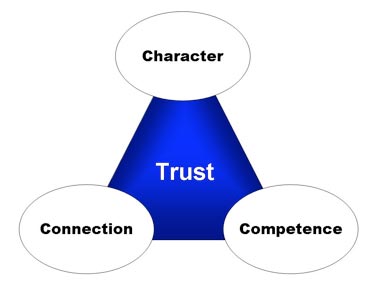
- Character. This is ethical trust. It is established when people have confidence in your integrity. People trust your character when they have repeated experience of consistency between what you say and what you do. People trust your character when they experience you being trustworthy in big things and little things.
- Competence. This is technical trust. It is established when people have confidence in your ability. People trust your competence when they have repeated experience of your knowledge and skills and your ability to achieve goals and solve problems.
- Connection. This is personal trust. It is established when people feel that you are personally engaged and believe you will act in their best interest. People trust you personally and feel connected when they have repeated experience of you listening, understanding, caring, and acting in their best interest.
Beware of passive withdrawals. Some leaders undermine trust not because they actively engage in negative actions, but because they fail to pay attention to the factors that build trust. And remember that trust accounts are personal. What feels like a withdrawal or deposit to one person may not to another…and it’s the other person’s view that matters. Withdrawals often have a greater impact than deposits. Trust is much easier to break than it is to build.
We tend to judge ourselves by our intentions. Others tend to judge us by how they actually experience us. Sometimes there is a gap between our intentions and how people actually experience us. Perception trumps intention every time! It is important to be aware of and to manage this gap.
High trust is a performance accelerator. Low trust is a performance decelerator. In fact, low trust operates as a “tax” on results, increasing the effort required to produce positive outcomes and diminishing their overall effect. This is why developing an atmosphere of trust is so critically important to team work and group performance.


